
On this page
- Which areas are historic districts?
- When does design review apply?
- Which gutters suit older Tacoma houses?
- What practical issues come up on old houses?
- How can you make the process easier?
- What do the design guidelines say about gutters?
- Do the guidelines cover rear and side elevations?
- What about tax incentives?
- What should a quote for a historic house include?
Which areas are historic districts?
Tacoma has nine historic districts. Four are on the Tacoma Register of Historic Places, which brings local design review: the Wedge Neighborhood, North Slope, Old City Hall and Union Depot/Warehouse districts. Others, including Stadium-Seminary, Salmon Beach, South J Street and Buckley's Addition, are listed on state or national registers, which generally does not affect ordinary work. The College Park area near the University of Puget Sound is on the National Register; a proposal to make it a local district was declined in 2022.
The North Slope Historic Special Review District, with more than 950 properties, is one of the largest historic districts in the country.
When does design review apply?
According to the City of Tacoma, any exterior work on City Landmarks that is visible from the street requires design review, and in the North Slope Historic District, exterior changes that require building permits also require design review. The Landmarks Preservation Commission uses its own design guidelines for the Wedge and North Slope and the Secretary of the Interior's Standards.
In practice:
| Work | Likely review? |
|---|---|
| Cleaning, resealing, minor repair | Generally no |
| Like-for-like gutter replacement | Often no permit needed; check |
| Changing gutter style on a visible elevation | Check with the Historic Preservation Office |
| Removing or covering box gutters | Check; may need review |
| Work on a City Landmark visible from the street | Yes |
When in doubt, contact the city's Historic Preservation Office before work starts.
Which gutters suit older Tacoma houses?
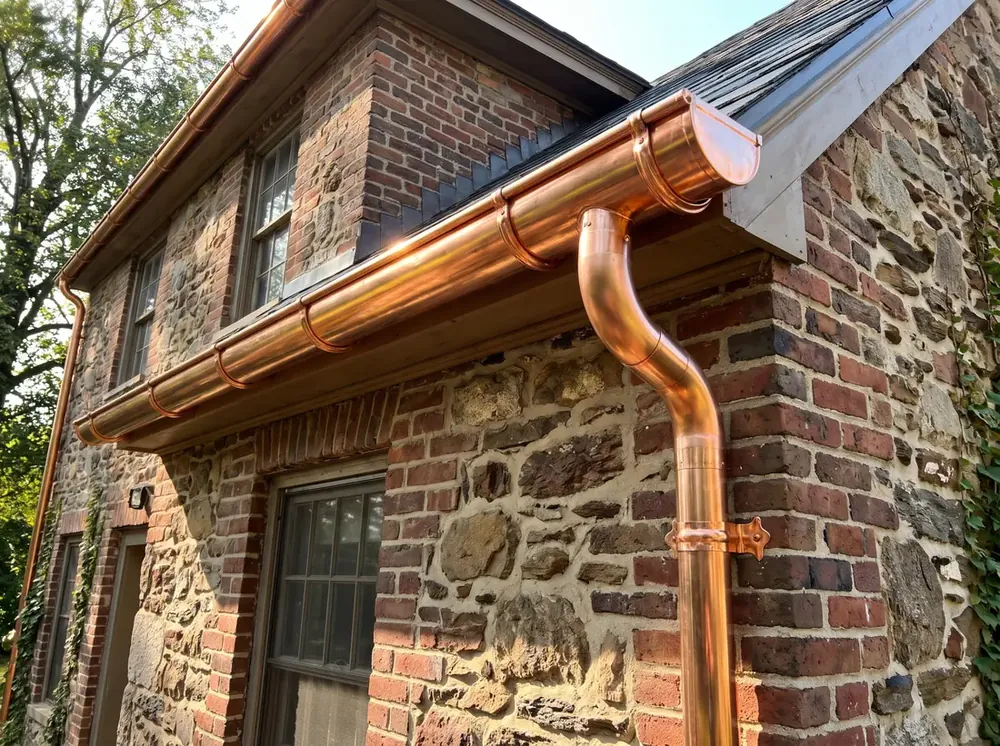
Half-round on round brackets is the traditional profile on many Victorian and early twentieth-century houses. See half-round gutters.
Copper is long-lived and traditional. See copper gutters.
Box gutters built into the roof edge are found on some older North Slope and Stadium District houses. Relining with metal keeps the original look.
K-style aluminum in a color matched to the trim is common and often acceptable where the house never had a distinctive original system.
What practical issues come up on old houses?
- Rafter tails instead of continuous fascia, which need careful hanger choice.
- Original cedar trim soft from decades of Tacoma winters.
- Tall walls and steep roofs, needing more ladder and staging work.
- Porches and bays, adding short runs and corners.
- Downspouts on visible elevations, best placed discreetly.
How can you make the process easier?
- Photograph the existing gutters and roof edge before work.
- Note what the house originally had, if known.
- Ask the contractor if they have worked in Tacoma historic districts.
- Contact the Historic Preservation Office early if you plan visible changes.
What do the design guidelines say about gutters?
The Wedge and North Slope design guidelines focus on keeping the character of historic houses on elevations visible from the street. In practice, that favors repairing original features where possible, and replacing them with compatible materials and profiles where repair is not practical. For gutters, that often means keeping half-round or box gutters where a house originally had them, choosing colors that suit the trim, and placing downspouts discreetly rather than across prominent facades.
Do the guidelines cover rear and side elevations?
Review focuses on what can be seen from public rights of way. Changes at the back of a house that cannot be seen from the street are generally treated more lightly, but the Historic Preservation Office can confirm what applies to a particular property.
What about tax incentives?
Tacoma's Landmarks Preservation Commission oversees certain property tax incentives for historic properties. If you are doing a larger rehabilitation that includes gutters, it may be worth asking the Historic Preservation Office whether any apply.
What should a quote for a historic house include?
Beyond the usual size, metal, hangers and downspouts, ask for the profile to be named, such as half-round, K-style or relined box gutter; the bracket or hanger type and how it attaches to rafter tails or fascia; how downspouts will be routed on the street-facing side; and any wood repair, matched to the existing profile. If design review is needed, ask whether the contractor will supply drawings or product details for the application.
How do you check a gutter contractor in Washington?
Washington does not license contractors the way some states do; instead the Department of Labor & Industries registers construction contractors, and registration requires a surety bond, liability insurance and a state business license. Work that adds to or changes a house, such as installing or replacing gutters, generally calls for a registered contractor, while plain gutter cleaning is one of the services the state lists as not needing registration. Look up any contractor's registration, bond and insurance on L&I's Verify a Contractor tool before you sign, and follow the state's hire-smart advice: get written bids and do not pay in full until the job is done. Ask, too, for a couple of addresses of recent jobs nearby and a written quote that spells out gutter size, metal and thickness, color, hanger type and spacing, downspout number and size, where each downspout drains, and who hauls the old metal away. In the North Slope and Wedge historic districts, check with the city's Historic Preservation Office before changing visible exterior details that need a permit.