
On this page
- Why is moss such a problem in Tacoma?
- How does moss get into gutters?
- What does moss do to gutters and the roof edge?
- What can be done about it?
- What should you avoid?
- When is moss a sign of something bigger?
- Which roofs grow the most moss?
- How often should mossy roofs and gutters be checked?
- Does moss mean the roof needs replacing?
- Can gutters themselves grow moss?
Why is moss such a problem in Tacoma?
Moss needs moisture, mild temperatures and shade. Tacoma supplies all three for much of the year. By the 1991 to 2020 normals listed on Wikipedia, the city averages about 31 of its 40.8 inches of yearly precipitation between October and March, and winters are mild, with long freezes uncommon. Shaded roofs under Douglas firs and cedars, or on the north side of a house, can stay damp from autumn to spring. That is ideal for moss.
How does moss get into gutters?
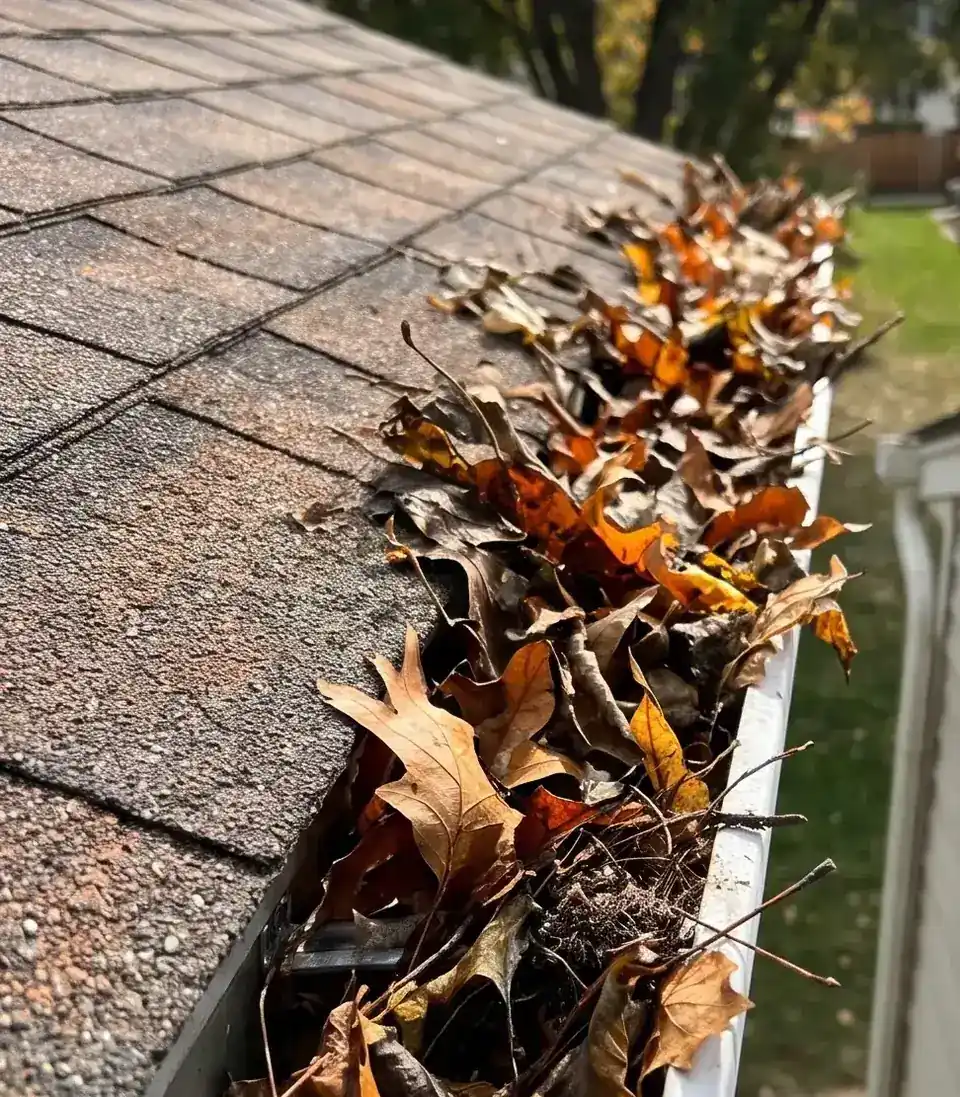
Moss grows on the shingles in cushions. As it grows, dries in summer or is knocked by rain, birds and wind, pieces break off and wash down the roof into the gutter. They are small enough to slip through coarse screens, and once wet they are heavy and sticky. They gather at outlets and in downspout elbows, where they plug the flow quietly through the wettest months.
What does moss do to gutters and the roof edge?
| Effect | Result |
|---|---|
| Plugs outlets and elbows | Overflow in long rains |
| Holds water in the trough | Joints stay wet; sealant fails sooner |
| Adds weight when wet | Sagging, loosened hangers |
| Keeps the roof edge damp | Fascia and soffit rot |
| Grows on the fascia itself | Paint fails; wood softens |
| Lifts and wets shingles | Roof leaks over time |
What can be done about it?
Keep gutters and outlets clear. Clean after the autumn leaf drop and again in spring, and check outlets in late winter, when moss is most active. See gutter cleaning.
Fit fine micro-mesh guards. Fine stainless mesh keeps moss clumps out of the trough. On shaded runs, expect to brush moss and debris off the mesh once or twice a year. See micro-mesh gutter guards.
Use bigger downspouts. 3x4 downspouts pass small clumps that would plug a 2x3 elbow.
Deal with the roof. Have moss removed gently by a roofer or a qualified cleaner. Avoid pressure washing asphalt shingles. Ask what treatment, if any, is applied, and how runoff is managed so it does not end up in storm drains and streams.
Let in light. Trimming branches that shade the roof helps it dry. Tacoma encourages tree planting and has a 30 percent canopy goal, and significant trees may be subject to city rules, so check before removing rather than pruning.
What should you avoid?
- Pressure washing shingles, which strips granules and drives water under them.
- Walking on mossy roofs, which are extremely slippery.
- Treatments that wash straight into the gutter and storm drain without any control of runoff.
- Coarse screens and foam inserts on mossy roofs, which fill with moss.
When is moss a sign of something bigger?
If moss grows thickly on the fascia or soffit, water is getting behind or over the gutter regularly. That calls for a look at the drip edge, the gutter pitch and the condition of the wood. See fascia and soffit repair.
Which roofs grow the most moss?
- North-facing slopes, which get the least sun.
- Roofs under Douglas firs, cedars and big maples.
- Low-pitch roofs, where water and debris linger.
- Older asphalt shingles with worn granules, and cedar shakes.
- Roofs near the water or in ravines, where air stays damp.
How often should mossy roofs and gutters be checked?
Late winter, when moss is most active and loosest, is the key time to check outlets and downspouts. A spring cleaning then clears what washed down over the winter. If the roof is treated or cleaned, the gutters should be cleaned afterward, because removal sends debris straight into them.
Does moss mean the roof needs replacing?
Not necessarily. Many roofs with moss are sound underneath. If shingles are lifting, curled or missing granules, a roofer can say whether repair or replacement is needed.
Can gutters themselves grow moss?
Yes. Gutters that hold water and debris can grow moss and even seedlings in the trough, and moss on the gutter lip and fascia is a sign water is regularly getting where it should not. Keeping the trough clean and the pitch right, so water drains completely after rain, keeps the gutter itself clear.
How do you check a gutter contractor in Washington?
Washington does not license contractors the way some states do; instead the Department of Labor & Industries registers construction contractors, and registration requires a surety bond, liability insurance and a state business license. Work that adds to or changes a house, such as installing or replacing gutters, generally calls for a registered contractor, while plain gutter cleaning is one of the services the state lists as not needing registration. Look up any contractor's registration, bond and insurance on L&I's Verify a Contractor tool before you sign, and follow the state's hire-smart advice: get written bids and do not pay in full until the job is done. Ask, too, for a couple of addresses of recent jobs nearby and a written quote that spells out gutter size, metal and thickness, color, hanger type and spacing, downspout number and size, where each downspout drains, and who hauls the old metal away. In the North Slope and Wedge historic districts, check with the city's Historic Preservation Office before changing visible exterior details that need a permit.